
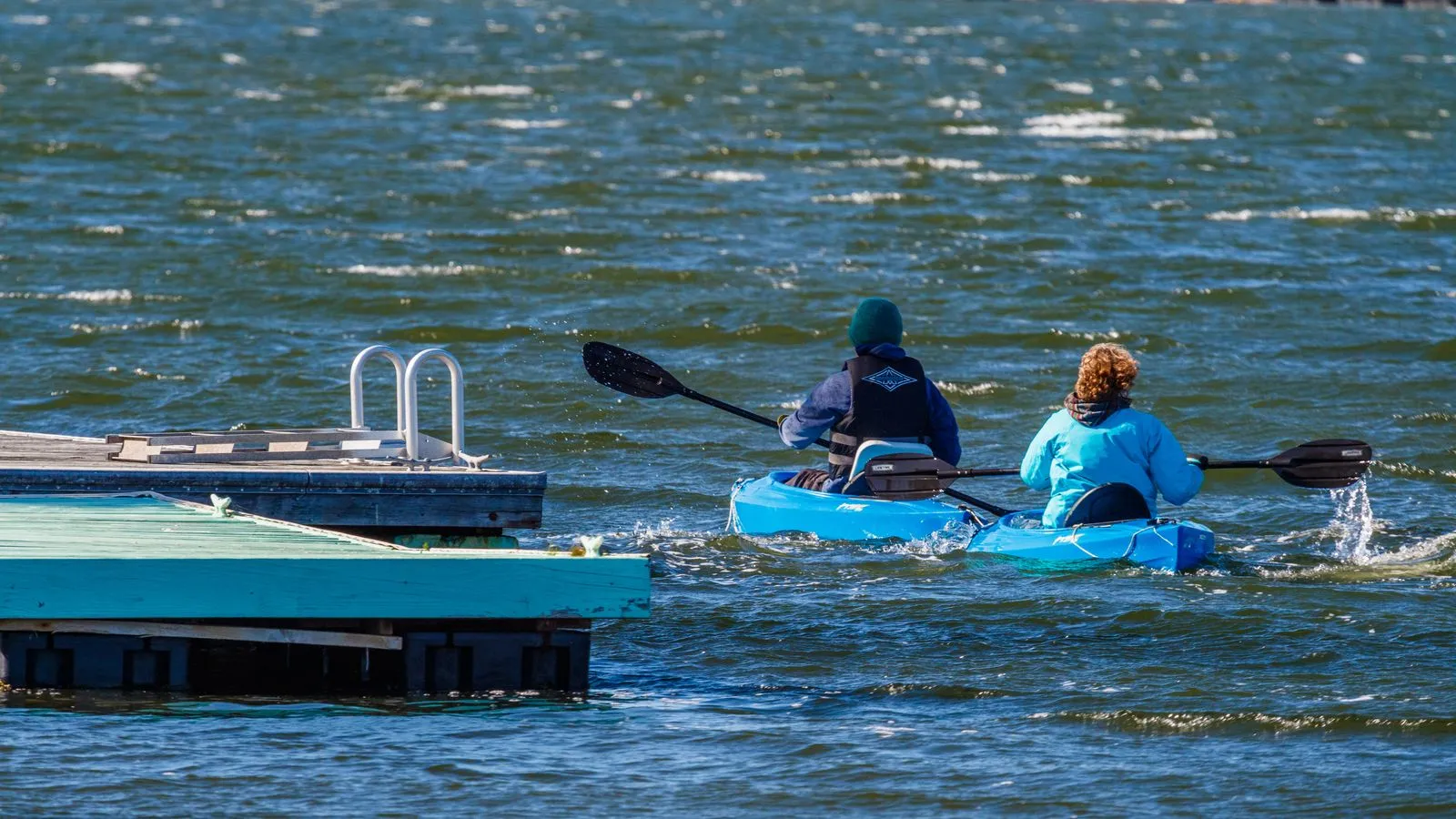
Your first sea kayak outing can feel straightforward when you know what to expect before reaching the water. A good fit helps you control the boat, while a calm launch and simple paddle strokes make the first minutes easier. Conditions matter, too: Lake Michigan can change quickly, so check the forecast and follow the rental provider’s guidance. Use this checklist to prepare, ask useful questions, and decide whether the day is right for you.
Get a Secure, Comfortable Fit
Tell the rental staff your height, approximate weight, and experience level so they can match you with a suitable kayak and paddle. Once seated, adjust the foot braces so your knees bend slightly and your feet can press against them. Your seat should support your back without forcing you into a stiff position. Ask staff to check your setup before you carry the kayak to the launch.
Wear a properly fitted personal flotation device and keep it fastened as instructed. Check that the cockpit feels roomy enough to exit, but not so loose that you slide around. Store only essentials in the boat, secured in a dry bag if available. Ask where your phone, water, and any rental-provided safety equipment should go so they remain reachable without interfering with paddling.
Launch Without Rushing
Before launching, listen to the safety briefing and find out where you may enter and exit the water. Carry the kayak with help if needed, keeping the bow pointed toward the water and watching for people, rocks, and other boats. Set the kayak parallel to the shoreline in shallow water, then follow the provider’s instructions for getting seated and settling your paddle.
Take a moment to check that your spray skirt, if used, is fitted correctly and that you know how to release it. Keep the kayak stable as you get in; avoid stepping onto the deck or standing in the boat. If you feel unsteady, pause and ask staff for help rather than trying to correct the setup while drifting away from shore.
Use Simple, Relaxed Paddle Strokes
Hold the paddle with both hands about shoulder-width apart, keeping your grip relaxed. Use a forward stroke by placing one blade near your toes, drawing it back alongside the kayak, and switching sides. Rotate through your torso instead of relying only on your arms. Small, steady strokes usually give beginners better control than hard, hurried ones.
To turn, make a wider sweep with the paddle on the side opposite the direction you want to go. Look where you intend to travel, and leave space between your kayak and other boats, swimmers, or shore structures. Practice near the launch area while conditions are manageable. If you become tired, cold, or uncomfortable, tell your group and head back rather than pushing farther out.
Check Conditions Before You Go
Check the latest marine forecast for wind, waves, thunderstorms, and visibility before leaving home, then check again with the rental provider. Conditions on Lake Michigan can differ from what the air temperature suggests. Ask specifically whether the planned route and launch area are suitable for a beginner, and follow any direction to delay, stay close to shore, or cancel.
Wear clothing suited to the water temperature, not just the weather on land, and bring a change of dry clothes. Avoid launching during lightning, strong winds, rough water, or poor visibility. Confirm the rental’s return time, boundaries, and emergency instructions before setting out. Evanston Kayak Co. can explain its local procedures when you arrange your rental, but always make the final decision with current conditions in mind.
A comfortable fit, unhurried launch, basic strokes, and a careful conditions check give you a stronger start on the water. Ask questions whenever instructions are unclear, and choose a shorter outing if you are unsure about your stamina or the forecast. Contact a local rental provider to review beginner options and the day’s conditions before booking.